



TABLE OF CONTENTS
Key Takeaways
- Your pool filter cartridge should be replaced every 1–2 years (around 2,000 hours of use).
- Cloudy water, poor flow, or high pressure are early signs of cartridge failure.
- Cleaning helps — but once pleats collapse or fabric tears, performance won’t recover.
- A discolored, slimy, or cracked cartridge can no longer filter effectively.
- Replacing on schedule protects your pump, plumbing, and chlorine efficiency.
- Neglecting replacement shortens equipment life and wastes energy.
- Clarus ProGrade filters deliver longer life and antimicrobial protection for crystal-clear water.
How to Tell When Your Pool Filter Cartridge Is Failing
Your pool filter cartridge works hard — quietly catching everything from sunscreen oils to fine debris. But even the best filters wear out.
When that happens, your water turns cloudy, your chemicals stop working as well, and your pump starts to strain.
Before you jump to replacement, it’s important to know this:
Not every issue means your cartridge is done for good. Sometimes, a thorough cleaning will restore performance. Other times, cleaning won’t be enough — and that’s when it’s time to replace.
Here’s how to tell the difference between a filter that just needs cleaning and one that’s truly reached the end of its lifespan.

When To Clean Your Filter Cartridges
The simplest rule? Clean your cartridge when the pressure gauge rises 8–10 PSI above your normal reading.
For example, if your new filter’s clean baseline is 10 PSI, plan to rinse it once it reaches around 18 PSI.
Other times you should clean your filter include:
-
- At least every 6 months (or more often for heavy use)
- After major rainstorms or heavy debris
- Following large pool parties or frequent swimmer loads
- During or after algae treatment
-
As part of opening or closing your pool for the season
Staying proactive with cleaning keeps your water clear, extends cartridge life, and prevents unnecessary strain on your system.
Pro Tip Always rinse cartridges with a gentle hose stream — never pressure wash. Excessive force can damage the pleats and shorten filter lifespan.
When To Replace Your Filter Cartridges
Even with regular cleaning, cartridges eventually lose their filtration power. The pleats soften, the fabric stretches, and debris begins to pass right through.
If your pool water stays cloudy after cleaning — or if the PSI doesn’t drop back to normal — it’s likely time for a replacement.
Your filter doesn’t have an official expiration date, but most last 1–2 years or about 2,000 hours of use.
Still, lifespan varies depending on water chemistry, pool size, and maintenance habits.
If you’re noticing any of these issues, your filter may be signaling that it’s ready for replacement:
11 Clear Signs It’s Time to Replace Your Pool Filter Cartridge
Now that you know when cleaning stops being enough, here are the 11 signs your pool filter cartridge is due for replacement:
Your filter cartridge works quietly behind the scenes, trapping everything from leaves and pollen to sunscreen oils and fine debris.
But when it starts to wear down, your water clarity — and your system’s efficiency — will tell the story.
Here’s how to spot the signs before your pool turns cloudy.
1. Cloudy or Discolored Water
If your pool water stays cloudy even after cleaning and balancing chemicals, your filter may be clogged or the media too worn to trap fine particles.
Warning
2. Poor Filtration Performance
You’re cleaning your pool, but debris still floats around or settles on the bottom. This is a red flag that your filter’s pleats have lost their tight weave and can’t trap contaminants like they used to.
Poor filtration performance is a clear indicator that it's time to replace your pool filter cartridge.

3. Increased Filter Pressure
A filter that’s struggling to breathe will show it on the pressure gauge.
If your PSI remains high after cleaning or spikes quickly between cycles, the cartridge is likely clogged beyond recovery.
Pro Tip Rising pressure without clear water almost always means the cartridge fibers are saturated or compacted.
4. Reduced Water Flow or Circulation
If you notice weaker water return from your jets or poor skimmer suction, your filter may be restricting flow. A clogged or collapsing cartridge forces your pump to work harder and can shorten its lifespan.
5. Frequent Cleaning Required
If you’re cleaning your filter more often than usual and your water still isn’t staying clear, it’s time.
When cartridges lose efficiency, they clog faster after each cleaning, forcing you into a frustrating cycle of rinse-and-repeat.
6. Persistent Water Quality Issues
You’ve balanced your chlorine, pH, and alkalinity but the water still looks dull or greenish. That’s a telltale sign your filter isn’t doing its job anymore. Replacing the cartridge restores proper circulation and chemical effectiveness.
7. Unpleasant Odor or Taste
If the water smells musty or “off,” your filter may no longer be removing organic contaminants. A foul odor usually means bacteria or algae are trapped in a filter that’s too degraded to clean properly. If you notice a strange smell coming from your pool, it's time to check and possibly replace your filter cartridge.
8. Physical Damage or Visible Wear

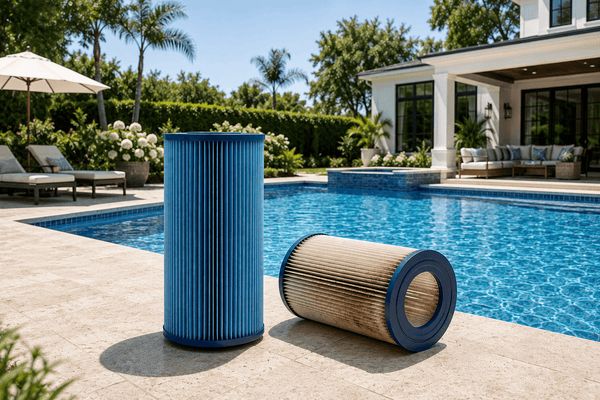
Check your cartridge for cracks, tears, fraying, or warping. Even small imperfections can reduce filtration and allow debris to slip through.
Common red flags include:
-
- Broken Bands or Collapsed Pleats: Reduced surface area limits water flow and debris capture.
- Warping or Distortion: Caused by heat or chemical imbalance — prevents the cartridge from sealing properly.
-
Cracked End Caps: Affects structure and can lead to leaks or bypass.
If pleats remain stiff or dirty after cleaning, or if the end caps feel brittle, your filter has reached the end of its lifespan.
Warning
9. Chemical Damage, Discoloration, or Oily Build-Up

Chemical imbalance can quietly destroy a cartridge long before it looks worn.
If the pleats feel slick, discolored, or coated with residue that won’t rinse away, your filter media may be chemically degraded.
Watch for:
-
- Brown or Gray Staining: Signs of metal or mineral buildup.
- Slimy or Oily Texture: Sunscreen and body oils embedded in the fabric.
- Bleached or Brittle Fabric: Indicates over-chlorination or low pH damage.
Soak lightly stained filters in a cartridge cleaner, but if stains or residue persist after cleaning, it’s time to replace.
Pro Tip Avoid using acid baths to remove stains as they can weaken fibers and shorten filter life.
10. Pressure Doesn’t Drop After Cleaning
After rinsing your filter, PSI should return to normal. If it doesn’t or the pressure rises again within a few days, your cartridge fibers are compacted and can’t rebound.
11. The Cartridge Is 1–2 Years Old
Most pool filter cartridges last about 1–2 years or 2,000 hours of use.
Even if it looks fine, internal wear can cause microtears and reduced performance over time.
““We replace our filter every 18 months — the difference in clarity is night and day.””
The Bottom Line
If your filter shows even two or three of these signs, it’s time for a replacement.
A fresh cartridge restores flow, clarity, and sanitizer efficiency. It also helps prevent costly pump strain or algae growth.
What To Do When It’s Time To Replace

When replacement time comes, always choose a cartridge that matches your filter’s size, flow rate, and brand.
Clarus filter cartridges are built with:
-
- DiamondCore™ pleat design for maximum surface area
- Antimicrobial media to resist biofilm and odor buildup
- NSF/ANSI 50 certification for safety and performance
Find your Clarus filter cartridge by size or model and keep your pool water crystal-clear season after season.Ready for a Replacement?
Related Articles
FAQs
How long does a pool filter cartridge last?
Can I just clean my filter instead of replacing it?
How often should I clean my cartridge?
Why does my new filter clog so fast?
How can I extend the life of my new cartridge?
What happens if I don’t replace my pool filter cartridge?
How do I know which replacement cartridge fits my filter?
Routine testing, cleaning, and timely replacement with Clarus ProGrade filters are the simplest ways to keep your water clear, efficient, and safe all season long.
Was this post useful?


Questions/Comments
Have a question or thought? Click below to leave your comment.
Questions/Comments
Have a question or thought? Click below to leave your comment.