



TABLE OF CONTENTS
Key Takeaways
- Regular pool testing keeps your water safe, clear, and perfectly balanced.
- Follow this step-by-step guide for accurate sample collection, testing, and interpretation.
- Learn how to read color results and correct imbalanced water.
- Understand the difference between test strips and liquid test kits so you can choose the best method for your pool.
Why Pool Testing Matters
Keeping your pool water clean and balanced is essential for safe swimming and long-lasting equipment. Pool test strips make this process quick, simple, and reliable — but accuracy depends on when and how you use them.
Testing regularly helps:
-
- Prevent skin and eye irritation
- Protect your pool equipment from corrosion or scaling
- Keep the water clear and free of bacteria and algae
- Ensure chlorine and sanitizers work efficiently
Watch the video below for how to use pool test strips. Or keep reading for a complete guide on test strips and how they compare to liquid test kits.
What You’ll Need
-
- Pool test strips (like Clarus CPA-TS71-60)
- A clean, dry container to hold the strips (optional)
- Your pool water sample

Step-by-Step Guide: How to Use Pool Test Strips
Step 1: Collect a Water Sample
Before you collect the sample, run your pump on high for at least one hour. This ensures even chemical distribution.
Using a clean glass or plastic cup, reach elbow-deep (about 12–18 inches below the surface) and collect water away from jets or chemical dispensers for the most accurate sample.
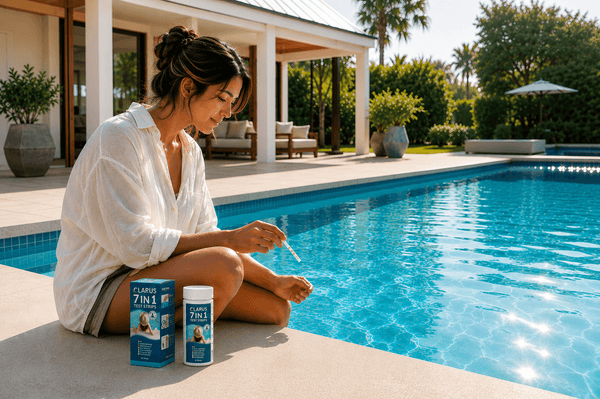
Step 2: Dip the Strip
Quickly dip one strip into the water and remove it immediately, no soaking required. Avoid touching the test pads or submerging your fingers during this process.
Step 3: Wait and Compare
Hold the strip flat for about 15 seconds. Then, match the colors to the chart on your test strip packaging to read your pool’s chemical levels.
Step 4: Adjust Your Chemicals
Here’s a quick reference guide for your Clarus 7-in-1 Test Strips:
Pro Tip Always test at least 2–3 times a week during peak season. More often after storms, heavy use, or unusual water changes.
Related:
For more help with balancing your pool chemicals, check out our guide to
Basic Pool Chemistry 101
Understanding the Key Parameters
To maintain a healthy, well-balanced pool, it’s essential to understand what each reading on your 7-in-1 test strip measures. Every parameter plays a role in water clarity, comfort, and the longevity of your pool system.
Use this guide to interpret your 7-in-1 test strip readings accurately:
-
-
Total Hardness (TH): Measures calcium and magnesium levels to prevent corrosion or scale buildup.
-
Total Chlorine (TC): Includes both active (free) and used chlorine, ensuring your pool is properly sanitized.
-
Total Bromine (TB): Indicates active bromine sanitizer levels — used mainly in spas or bromine-based pools.
-
Free Chlorine (FC): Measures active chlorine that kills bacteria, algae, and other contaminants.
-
pH: The most important factor for swimmer comfort, equipment protection, and chlorine efficiency.
-
Total Alkalinity (TA): Buffers pH and prevents rapid fluctuations caused by rain, chemicals, or swimmer load.
-
Cyanuric Acid (CYA / Stabilizer): Protects chlorine from sunlight breakdown, keeping sanitizer levels effective longer.
-
Total Hardness (TH): Measures calcium and magnesium levels to prevent corrosion or scale buildup.
Pro Tip
If your pool uses bromine, focus on the Total Bromine reading instead of Free Chlorine. For outdoor chlorine pools, check that Cyanuric Acid stays between 30–50 ppm — too low wastes chlorine, too high makes it less effective.
VS

Total chlorine is all that matters.

Free chlorine keeps you safe; a big TC–FC gap means you need to shock.
Pool Test Strips vs. Liquid Test Kit: Which One is Better?
When it comes to testing your pool water, you have two main options: pool test strips and liquid test kits. Both methods provide accurate results, but they have distinct advantages depending on your needs.
Here’s a side-by-side comparison to help you decide which testing method fits your routine best.
Test Strips are quick, convenient, and perfect for weekly checks.
Liquid Kits offer higher precision for advanced troubleshooting or professional-grade balancing.
Pro Tip
Many pool owners use both test strips for routine checks and a liquid kit for confirmation before major chemical adjustments.
Which Should You Choose?

For most homeowners, test strips are the best everyday option as they are simple, affordable, and reliable.
If you need lab-level accuracy or are diagnosing persistent issues (like algae or cloudy water), a liquid kit is the better choice.
For quick, accurate pool checks, shop Clarus 7-in-1 Test Strips or explore the Clarus 3-in-1 Liquid Test Kit for professional-grade precision.

Clarus 7-in-1 Pool & Spa Test Strips – Chlorine, Bromine, pH, Alkalinity, Hardness & Cyanuric Acid, 60 Count

Related Articles
FAQs
Do pool test strips really work?
Can I use the same strips for my spa?
How often should I test my pool water?
How long should strips stay in the water?
What if my results are off?
Why might results be inconsistent?
What’s the difference: Free vs. Total Chlorine?
Subscribe to Clarus updates for pro-level water balance tips, maintenance hacks, and expert-approved product guides — straight to your inbox.Get Smarter About Pool Care.


Questions/Comments
Have a question or thought? Click below to leave your comment.
Questions/Comments
Have a question or thought? Click below to leave your comment.